
Last updated October 17, 2026
 Metal roofing
 Architectural shingles
 Tile roofing
 GAF
GAF Owens Corning
 Flat & low-slope
Free roof inspection with deck photos before we talk money - GAF and Owens Corning certified installation
Roofing Warning Signs: A San Antonio Homeowner’s Reference Guide
The most expensive roof failure in a San Antonio home rarely starts with a visible leak. It starts with granule loss that goes unnoticed in gutters for two or three seasons, leaving shingles exposed to direct UV until they crack. By the time water reaches your ceiling, the decking underneath may already be soft, stained, and quietly rotting. This guide and our Complete Guide to Roofing in San Antonio walk you through what to look for in your attic, your gutters, and along your fascia boards so you can read your roof the way a San Antonio roofer does. You’ll learn which warning signs are routine, which ones demand immediate action, and what question to ask any contractor who tells you a roof under 15 years old needs full replacement.
Styles & brands we work with
Quick Answer
The earliest roof warning sign in San Antonio is granule loss in gutters and downspouts, which signals UV degradation long before a leak appears. Interior warning signs show up in the attic first: dark staining on the underside of decking, visible daylight through gaps, and softened wood around vents and chimneys. If you see granules collecting at downspout elbows or staining in the attic, get a professional inspection before the problem reaches your living space.
Table of Contents
- Why Granule Loss Is the First Warning Sign San Antonio Homeowners Miss
- How to Read Your Attic: Staining, Daylight, and Deck Softness
- Hail Damage vs. Heat Blistering: Similar Look, Different Response
- Fascia Board Rot: The Overlooked Sign of Flashing Failure
- Other Exterior Warning Signs on San Antonio Roofs
- Repair vs. Replacement: Reading the Threshold Correctly
- Common Mistakes to Avoid
- When to Call a Professional
- Frequently Asked Questions
- The Bottom Line
Why Granule Loss Is the First Warning Sign San Antonio Homeowners Miss
Asphalt shingles are coated with ceramic granules that do two jobs: they block UV radiation from degrading the asphalt below, and they add fire resistance and impact strength. In San Antonio, where the sun delivers roughly 220 to 230 days of meaningful UV exposure each year, granules take a beating. They slowly release from the shingle surface and wash into gutters. And that’s where the evidence sits, sometimes for years, waiting for someone to look.
What does granule loss actually look like? In your gutters and downspouts, you’ll see a coarse, sandy sediment that ranges from dark gray to black, sometimes mixed with lighter flecks depending on your shingle color. A thin dusting is normal, especially within the first year or two after a new roof installation. A quarter-inch-deep accumulation that returns quickly after cleaning is not.
Here’s a practical threshold to use:
- Light dusting at gutter seams and corners: normal wear, especially on slopes facing south and west.
- Visible piles at downspout elbows that you can scoop with a finger: elevated wear. Track it, check again after the next big storm.
- Granules that persist after a full gutter clean and reappear within a month: the shingles are shedding at a rate that shortens their life, and you’re likely 3 to 5 years from needing replacement.
- Bald spots on shingles where the asphalt beneath is exposed and shiny: active UV degradation. This is urgent, as the asphalt will crack and split, letting water reach the decking.
The San Antonio factor is UV, not moisture. In Houston or New Orleans, moss and algae growth signal moisture retention. In San Antonio, we don’t get persistent surface moisture for most of the year. What we get is heat. Shingle temperatures on a July afternoon can reach 160°F or higher. That heat accelerates the breakdown of the asphalt binder that holds granules in place. A roof that would last 25 years in a cooler climate can age 30 to 40 percent faster here, especially on unshaded south-facing slopes, which is why we wrote a Seasonal Roofing Care for San Antonio: Year-Round Homeowner’s Guide.
When we inspect roofs for roof repair in San Antonio, granule loss is often the first conversation point, because it tells us how much functional life remains in the shingle, independent of what the calendar says.
How to Read Your Attic: Staining, Daylight, and Deck Softness
Interior warning signs almost always appear in the attic before they reach your ceiling. The attic is where roof leaks announce themselves first: the water enters through a broken seal or cracked shingle, travels down the underside of the decking, and pools or stains before it ever accumulates enough to break through drywall. If you wait until you see a brown ring on your living room ceiling, the leak has been working for weeks or months.
Here’s a step-by-step attic inspection you can do safely in about 20 minutes. You’ll need a bright flashlight, a dust mask, and a willingness to move carefully across joists, never the drywall below.
- Go into the attic in the morning on a bright day. Turn off the attic light. Let your eyes adjust for 60 seconds. Look for any place where daylight shows through the roof deck. Gaps at ridge vents, soffit vents, and gable vents are normal. Daylight through a crack in the plywood or around a pipe collar is not.
- Turn on your flashlight and scan the underside of the decking, starting at the highest point and working downward. Look for dark staining that follows the slope of the roof. Water travels downhill, so stains often appear as long, narrow streaks running from a penetration point toward the eaves.
- Check around every penetration: plumbing vents, exhaust fan housings, the chimney chase, and any electrical conduit. These are the most common leak sources on a San Antonio roof because the flexible rubber boots around vent pipes degrade in heat and sunlight. Press a finger gently against the decking near these points. Soft, spongy wood means active saturation.
- Look for rust or staining on nail points protruding through the decking. Rusted nails near a seam suggest moisture has been traveling along that seam, even if the wood itself appears dry now. Sometimes the nail head rusts from condensation; other times it’s a sign of an intermittent leak.
- Check the insulation, especially the top layer. Fiberglass batt insulation that has been wet will look compressed, discolored, or moldy in spots. Blown-in cellulose will clump and feel heavier. Wet insulation loses R-value, and replacing it after a repair is often necessary to prevent moisture from lingering.
If your home is older, pay extra attention to the decking material. San Antonio homes built before roughly 1975 sometimes have 3/8-inch plywood decking instead of the modern 1/2-inch standard. Thinner decking softens faster when wet. If you’re in an older neighborhood like Jefferson or Monticello Park, and your decking is original, a professional inspection is worth scheduling every few years even without visible symptoms.
Erik Lindgren, owner of Birchbark Roofing San Antonio, notes something he’s seen repeatedly in this market: “In San Antonio, attic ventilation determines how long any shingle will last. An attic that bakes at 150°F every afternoon doesn’t just cook the shingles from above, it degrades them from below. When we see staining near ridge lines, it’s often because inadequate ventilation trapped moisture in the attic and the decking absorbed it from underneath.”
Hail Damage vs. Heat Blistering: Similar Look, Different Response
If you look at a shingle closely and see what appears to be a small, circular indentation where granules have been knocked away, you might be looking at hail damage. Or you might be looking at a blister from heat. The difference matters because hail damage often triggers an insurance claim, while heat blistering is a wear issue that insurance typically does not cover. Calling one the other can waste your time, damage your claims history, or miss genuine coverage.
Here’s how to tell them apart:
- Hail damage creates a physical break in the shingle surface. The asphalt mat is dented or cracked, and you can usually feel the indentation with a fingertip. The exposed area is irregular, and granules around the impact point look displaced or crushed into the asphalt. Hail hits randomly across the roof surface, so you’ll see clusters of damage on some slopes and clean shingles on others, especially on the leeward side.
- Heat blistering forms when moisture trapped inside the shingle expands under high temperature and pushes the asphalt upward. Blisters are raised, not indented. They often pop, leaving a small crater where granules are missing, but the underlying asphalt mat remains intact. Blisters appear more uniformly across south- and west-facing slopes and follow a pattern rather than a random hit.
- The coin test, once you’ve confirmed a pattern, is to compare the marks to the size of a dime. Hail that causes insurable damage in San Antonio is usually 1 inch in diameter or larger, leaving marks bigger than a quarter. Blisters, by contrast, tend to be smaller than a dime and shallow.
San Antonio sits in a transitional hail zone. Storms move off the Edwards Plateau and can drop large hail from early spring through early fall. A storm that produces quarter-sized hail in Stone Oak may drop nothing in Schertz. If your neighborhood reports hail and your neighbors are filing claims, it’s worth having your roof checked, even if you don’t see granules in the driveway. Hail damage to shingles often doesn’t produce immediate granule loss at the gutter. The damage is to the shingle mat itself.
One more distinction that matters: hail damage affects the functional life of the shingle immediately. Heat blistering is a progressive condition. Both eventually lead to granule loss and cracking. The difference is the path to repair, which is why a professional assessment from a roofer familiar with San Antonio storm patterns, not a general contractor, often determines whether a claim is filed correctly.
For a full evaluation of storm-related wear, a roofing company in San Antonio that has inspected hundreds of local roofs will know which weather events in the region actually produced damaging hail, and which ones didn’t.
Fascia Board Rot: The Overlooked Sign of Flashing Failure
Fascia boards are the horizontal trim boards that run along the edge of your roof line, directly behind the gutters. In San Antonio, when a fascia board starts rotting, most people assume the gutter is the problem. Sometimes it is. But more often, the rot is coming from above: a flashing failure at the roof edge, a drip edge that was installed incorrectly or has pulled loose, or shingle overhang that’s too short and lets water wick back under the shingle and down the fascia face.
Flashing is the metal material, usually aluminum or galvanized steel, that directs water away from joints and seams. At the roof edge, drip edge flashing is the first line of defense. It’s a simple L-shaped piece of metal installed under the shingles and over the fascia. When it’s missing, bent, or too short, water follows surface tension around the roof edge and runs down the fascia board instead of into the gutter.
Here are the warning signs to look for:
- Peeling paint on fascia board faces, especially on the bottom edge, which suggests moisture is being absorbed from the eave side.
- Soft or crumbling wood near gutter hangers and downspout connections. The gutter itself may be fine, but the fascia behind it is losing structural integrity.
- Staining that follows the underside of the eaves rather than appearing at isolated points. This pattern suggests water is traveling along the length of the roofline, not dripping from a single leak.
- Fascia boards that have pulled away from the rafter tails, which indicates the fasteners have rusted out or the wood around them has decayed.
In San Antonio’s climate, fascia rot develops in a particular way. We get long dry spells punctuated by intense, short-duration downpours. During the dry period, a small flashing gap may not matter much; the wood stays dry. But when a July thunderstorm drops an inch of rain in 30 minutes, that same gap channels a continuous stream of water onto the fascia. The wood wets rapidly, dries slowly in the shaded eave area, and the cycle repeats. After a few seasons, the board is structurally unsound.
If you see fascia rot, don’t just replace the board. The roofer needs to find out why it happened. Replacing the board without fixing the flashing or correcting the shingle overhang means you’ll replace it again in a few years. A careful contractor will show you the specific point where water is getting where it shouldn’t, and address that before trimming out new fascia.
That same principle, find the cause before fixing the symptom, applies to most roofing work, and it’s the approach we take at roof replacement in San Antonio whenever a roof edge problem suggests deeper flashing issues.
Other Exterior Warning Signs on San Antonio Roofs
Granule loss, attic staining, hail impact, and fascia rot are the four big ones. But there are several other exterior signs that San Antonio homeowners should learn to recognize, because each points to a different underlying condition.
Curling shingle edges usually indicate poor attic ventilation. The shingle is being cooked from below by trapped heat. In San Antonio, where attics can hit 150°F in August, this is one of the most common causes of premature shingle failure. Curling edges no longer lie flat, which means wind can catch them and tear them off in the next strong storm. By the time you see curling, the shingles have lost much of their flexibility and are working their way toward brittleness.
Cracking appears most often on south- and west-facing slopes. The asphalt has dried out from years of UV exposure and temperature cycling. Cracks become entry points for water. If you can see cracks, you’re not in a repair conversation anymore; you’re in a budget-and-timeline conversation about replacement.
Missing shingles after a wind event are self-evident but often underestimated. A San Antonio thunderstorm producing 60 mph gusts can tear shingles off a roof that’s already weathered. A single missing shingle exposes the decking and the seams of the surrounding shingles, making the next rain a leak event. If you lose more than a dozen shingles across the roof, the roof’s integrated seal is compromised, and repairs become increasingly difficult to perform cleanly.
Loose or missing flashing at penetrations means the metal that protects your roof’s most vulnerable points has failed. Flashing around chimneys, skylights, and vent pipes is typically the first component to fail on any roof, often long before the shingles. If you see bent, lifted, or separated flashing from the ground, water is entering. This is always a repair situation if caught early.
Sagging rooflines are a structural red flag. A sag between rafters suggests the decking has been saturated and lost strength. A sag along the ridge suggests possible rafter or truss problems. Either way, this is not a repair you schedule casually. It’s a structural assessment that requires immediate attention and often a tarp interim response.
One pattern worth mentioning: San Antonio neighborhoods built in the same decade tend to experience similar roofing issues at similar times. If homes in your subdivision are getting replacement roofs, it’s not a coincidence. It’s a sign that your roof, built from the same materials by the same builder around the same year, is on a similar clock.
Repair vs. Replacement: Reading the Threshold Correctly
A warning sign doesn’t always mean a full replacement. Many San Antonio homeowners get told a roof needs replacing when the real issue is a focused problem that a repair could solve, as we explore in our DIY vs Professional Roofing: The San Antonio Homeowner’s Decision Guide. Understanding the threshold helps you ask better questions and avoid unnecessary spending.
Here’s a practical framework:
- Localized granule loss on one slope, with no exposed asphalt: monitor and plan. You’re likely 2 to 4 years from replacement, not in urgent territory.
- Isolated attic staining around a single penetration, with no deck softening: repair the flashing or boot and repoint the seam. This is a repair, not a replacement.
- Hail damage confirmed across multiple slopes: this usually triggers a full roof claim, since matching shingle colors and granular wear across sections is difficult and often disallowed by policy language.
- Bald shingles with exposed asphalt on more than 20 percent of the roof, or on multiple slopes: replacement conversation, because repairs at that density become a patchwork that doesn’t protect the roof as a system.
- Decking that is soft, crumbling, or visibly sagging in the attic: replacement conversation, because the structural layer is compromised, and shingle replacement alone won’t address it.
Now, the question to ask any contractor who recommends replacement on a roof that’s under 15 years old: “What specifically about the roof’s condition requires replacement rather than repair?”
A contractor who answers with specifics, granule loss on 60 percent of the south slope, split underlayment at the eaves, decking moisture readings above threshold at three separate inspection points, is giving you a diagnosis. A contractor who answers with vagueness, “it’s old,” “it’s seen better days,” “we recommend it at this age,” without evidence, is giving you a sales pitch. You’re entitled to see the specific findings that justify the expenditure. A written price for the recommended work is the baseline; the diagnosis behind the recommendation is what separates a roofer from a salesperson.
We work with materials from CertainTeed, Owens Corning, and Atlas, among others, and the appropriate product depends heavily on the specific conditions of your roof, slope angle, shade coverage, attic ventilation, and exposure. The right shingle for a fully exposed roof in Westover Hills may differ from the right shingle for a shaded roof in Terrell Hills. That’s a conversation worth having with someone who has walked both types of roofs.
Common Mistakes to Avoid
- Cleaning gutters without looking at what’s in them. Granules are your earliest warning system. Scoop out the debris, but look at the sediment first. Heavy granules mean your roof is talking to you.
- Waiting for a ceiling stain before investigating. A ceiling stain is a late-stage symptom. In San Antonio’s climate, the attic is where leaks reveal themselves first. A twice-a-year attic visual check, done at the beginning of spring and after the first fall cold front, catches most problems before they reach drywall.
- Ignoring a roof leak because it’s small and infrequent. Leaks that appear only during specific weather conditions, heavy downpours from the east, wind-driven rain from the north, are still leaks. The decking doesn’t care that the leak only happens twice a year. It’s absorbing water every time, and rot compounds.
- Patching over the symptom instead of addressing the cause. Caulking around a vent pipe without replacing the degraded boot, or covering a damaged area with roofing cement instead of replacing the shingle, buys a few months at most. The underlying failure continues.
- Filing an insurance claim before a professional has confirmed hail damage. A claim for heat blistering will likely be denied, and the claim stays on your record. Have the roof inspected first. If damage is confirmed, the inspection report becomes your claim documentation.
- Replacing one or two shingles and assuming the roof is fine. Shingle replacement addresses the visible problem. But if shingles are coming off because the seal strip has failed across the roof, or because the shingles have become brittle, the remaining shingles are materially compromised. Get an assessment of the whole roof, not just the missing piece.
- Choosing a contractor based on the lowest bid without a written price breakdown. A low number with no scope detail means the scope will change later. Get a written price in dollars that lists the specific work, and ask for that before any contract is signed. The written price is the standard, not the exception.
When to Call a Professional
Some warning signs are informational; you note them and keep watching. Others demand a professional response. You should call a roofer when you see granule accumulation that returns within a month of gutter cleaning, when attic inspection reveals staining or soft decking near any penetration, when a storm with reported hail moved through your neighborhood regardless of whether you see damage, when fascia boards are soft or pulling away from the roofline, or when shingles are curling, cracking, or missing in numbers that threaten the roof’s seal.
You should also call before you buy a home in San Antonio, preferably before the inspection contingency expires. Many buyers schedule a home inspection but not a roof-specific inspection, and many general home inspectors note “roof appears serviceable” without walking it. A dedicated roof inspection before purchase can prevent a five-figure surprise in year two.
Birchbark Roofing San Antonio offers free estimates throughout the San Antonio area. Call (903) 354-7802 to schedule a roof inspection. A live person answers every call, including nights and weekends.
Frequently Asked Questions
A roof in San Antonio should be professionally inspected at least once a year, ideally in early spring after the last hail season has moved through and before the summer heat sets in. If you have a roof over 10 years old, or if your home sits on a fully exposed lot with no tree shade, twice a year is a better schedule. The spring inspection catches storm damage from spring hail; the fall inspection catches UV degradation from the summer heat. Both are quick to schedule and a good roofer will document findings with dated photos so you can track changes over time. Call (903) 354-7802 to set up your next inspection.
Granule loss appears as coarse, sandy sediment that collects in gutter corners and at downspout elbows, typically in the same color family as your shingles. A light dusting is normal. A quarter-inch layer that returns within a month of cleaning indicates the shingles are shedding granules faster than they can afford to. When granule loss reaches that threshold, or when shingles begin showing bare asphalt spots where granules used to be, you’re in the final years of the roof’s functional life. For an exact assessment of your roof’s remaining life, call (903) 354-7802 for a free estimate.
Roof leaks that appear only under specific conditions usually mean water is entering through a gap that’s exposed only when wind drives rain at certain angles or when rain volume exceeds the roof’s drainage capacity. A flashing gap on the north side may stay dry during south-moving storms but leak steadily during a north wind event. Intermittent leaks are still leaks. The decking and insulation are absorbing water each time the condition occurs, and the damage compounds even between visible leaks. A professional can often reproduce the leak path during the inspection and pinpoint the exact entry point.
Hail damage creates a dented or cracked shingle surface where the asphalt mat is physically broken, and the damage appears randomly across slopes that faced the storm. Heat blistering creates raised bumps and small craters where moisture inside the shingle expanded under high temperature, and it appears most heavily on south- and west-facing slopes that get the strongest UV exposure. Hail damage is typically an insurance matter; heat blistering is a wear issue. If you’re unsure which one you’re seeing, get a professional inspection before filing anything with your insurer.
Roof repair costs in San Antonio vary by the scope of the problem, but most residential repairs fall between $300 and $1,800 depending on what’s needed, with the average repair for a specific issue like flashing replacement or a small shingle section running in the $400 to $900 range. Larger repairs that involve decking replacement or multiple penetrations can run higher. The most important number is the one you see before work starts. You should have a written price in dollars for the exact scope of the repair before any crew arrives. For a free estimate and a written price on your specific repair, call (903) 354-7802.
Home insurance typically covers roof replacement when the damage is caused by a sudden, covered event like hail or severe wind, not by normal aging or wear. In San Antonio, hail is the most common covered cause. The process usually involves an inspection, a claim filing, an adjuster visit, and then the replacement work. Some insurers have moved to actual cash value policies for older roofs, which means you’ll receive only the depreciated value if your roof is past a certain age. It’s worth reviewing your policy language before a storm and having a roofer’s inspection documented if storm damage is suspected.
The Bottom Line
Your roof is talking to you, but in San Antonio, it speaks in a dialect most homeowners never learned. It speaks in granules in the gutter, staining in the attic, curling edges on the south slope, and rot on the fascia board. Each signal points to a specific cause, and catching the signal early often means a focused repair instead of a full replacement. Check the gutters twice a year, check the attic on a bright morning, and keep an eye on the roofline after storms. When you see something you don’t understand, call someone who does, or explore more guides & resources to learn what your roof is telling you. The inspection is free, the price is in writing, and the answer is almost always less expensive than waiting.
Written by Erik Lindgren, Owner at Birchbark Roofing San Antonio, serving San Antonio since 2000.
See the difference
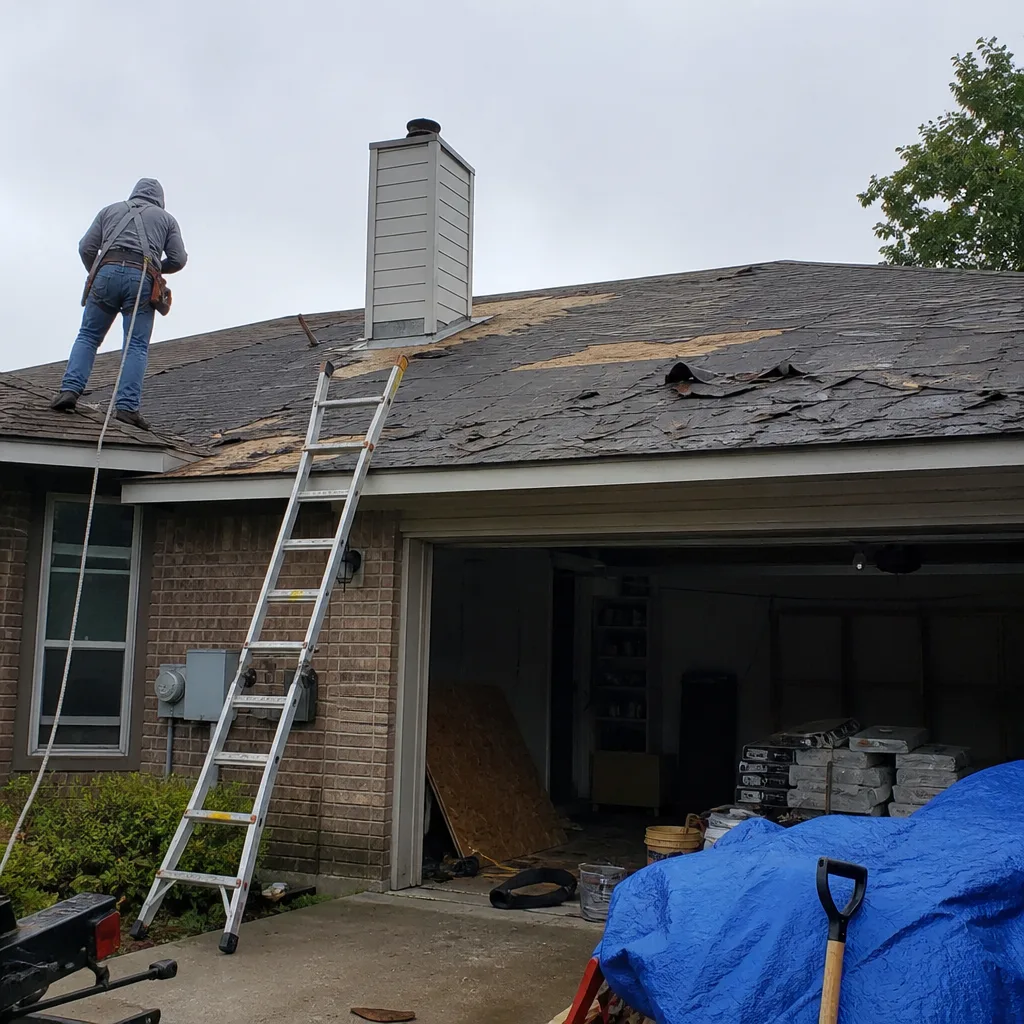 Before
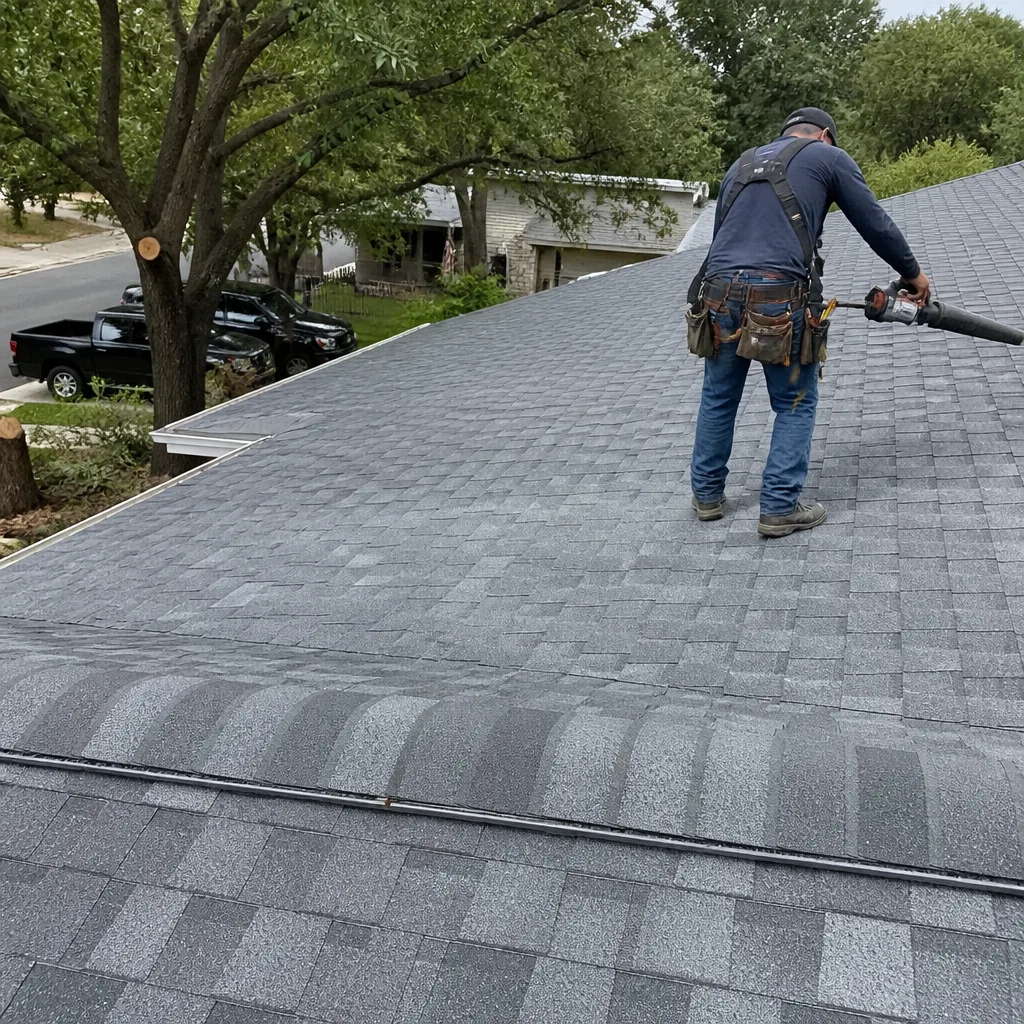 After
After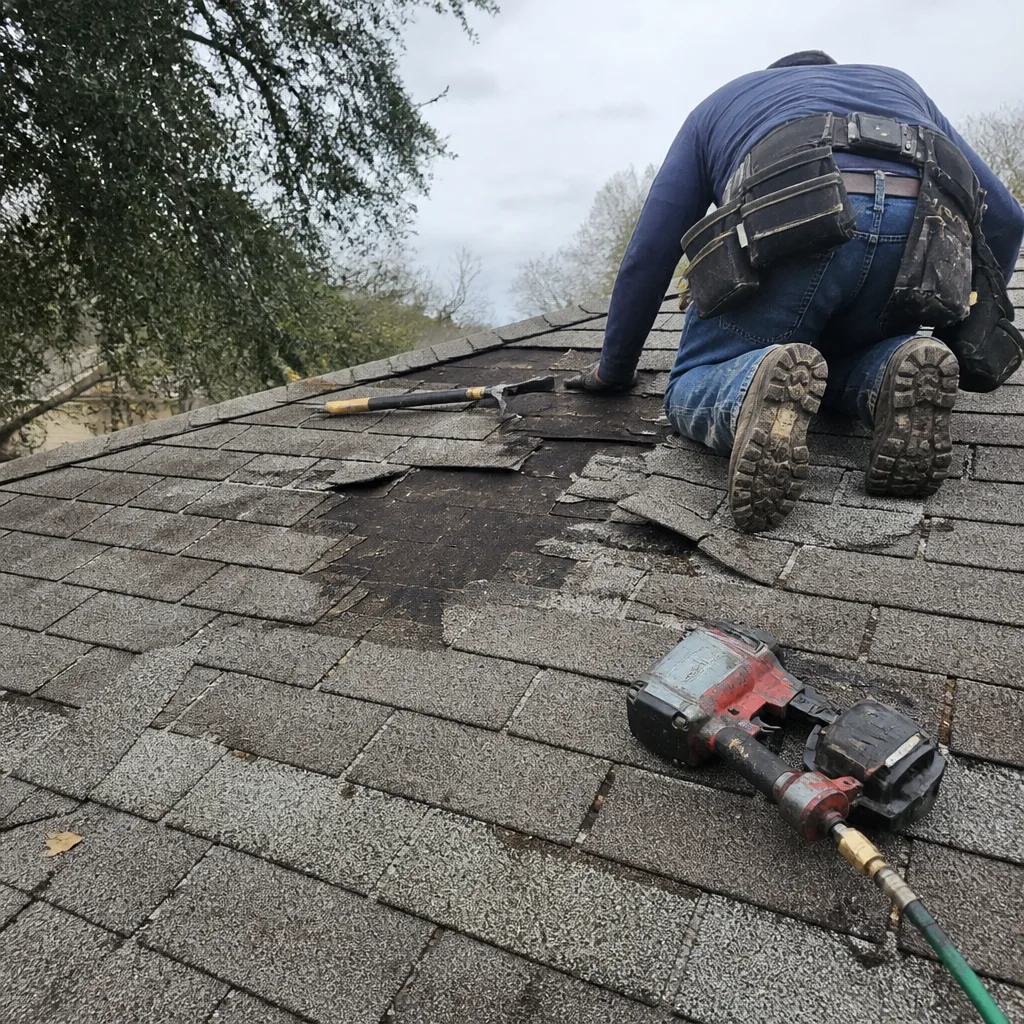 Before
 After
After Before
 After
After