
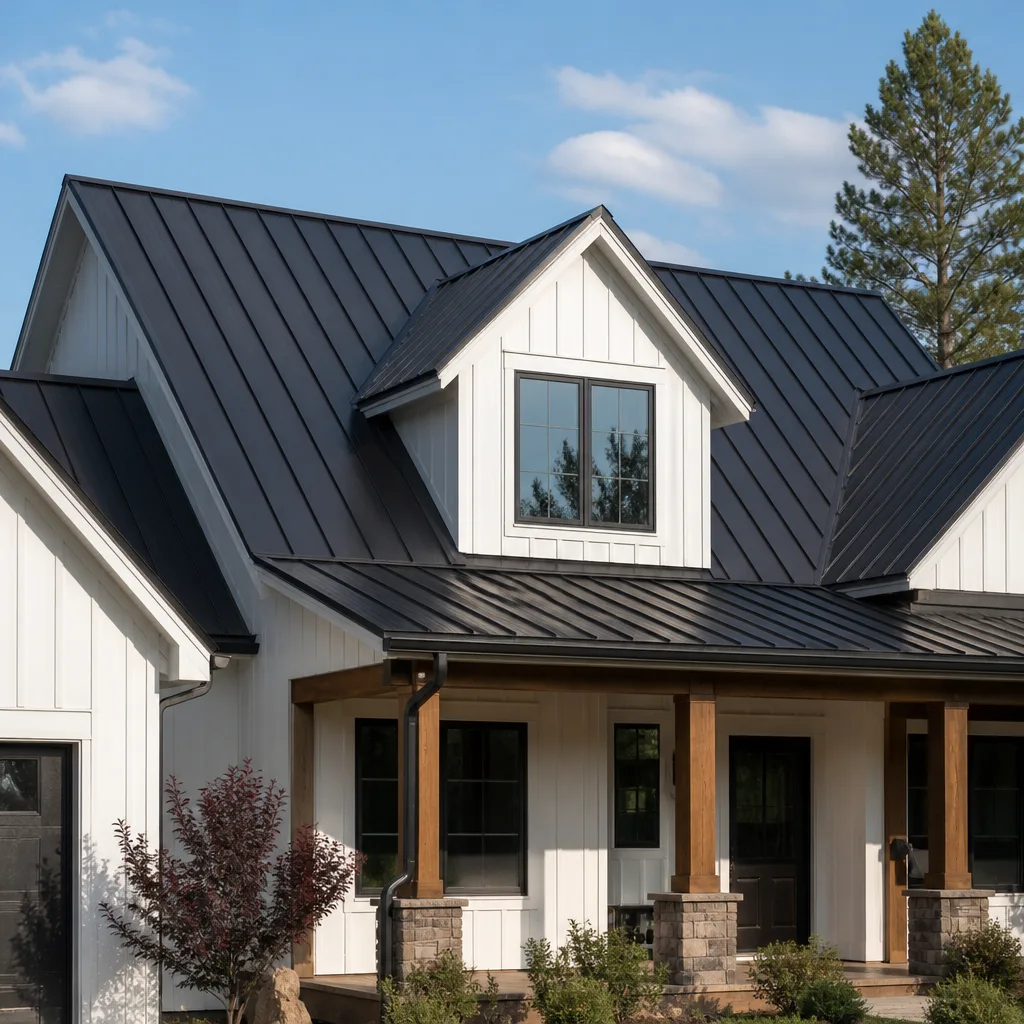
 Metal roofing
 Architectural shingles
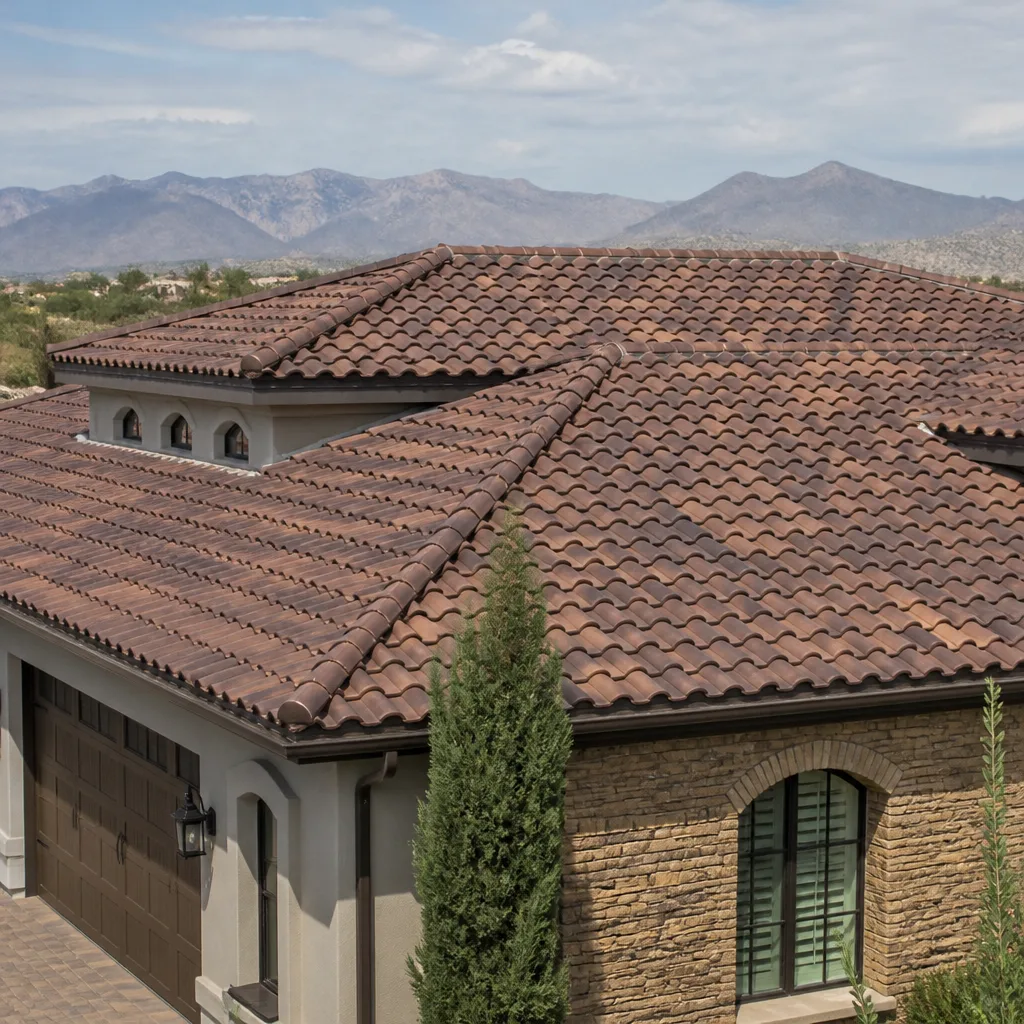 Tile roofing
 GAF
GAF Owens Corning
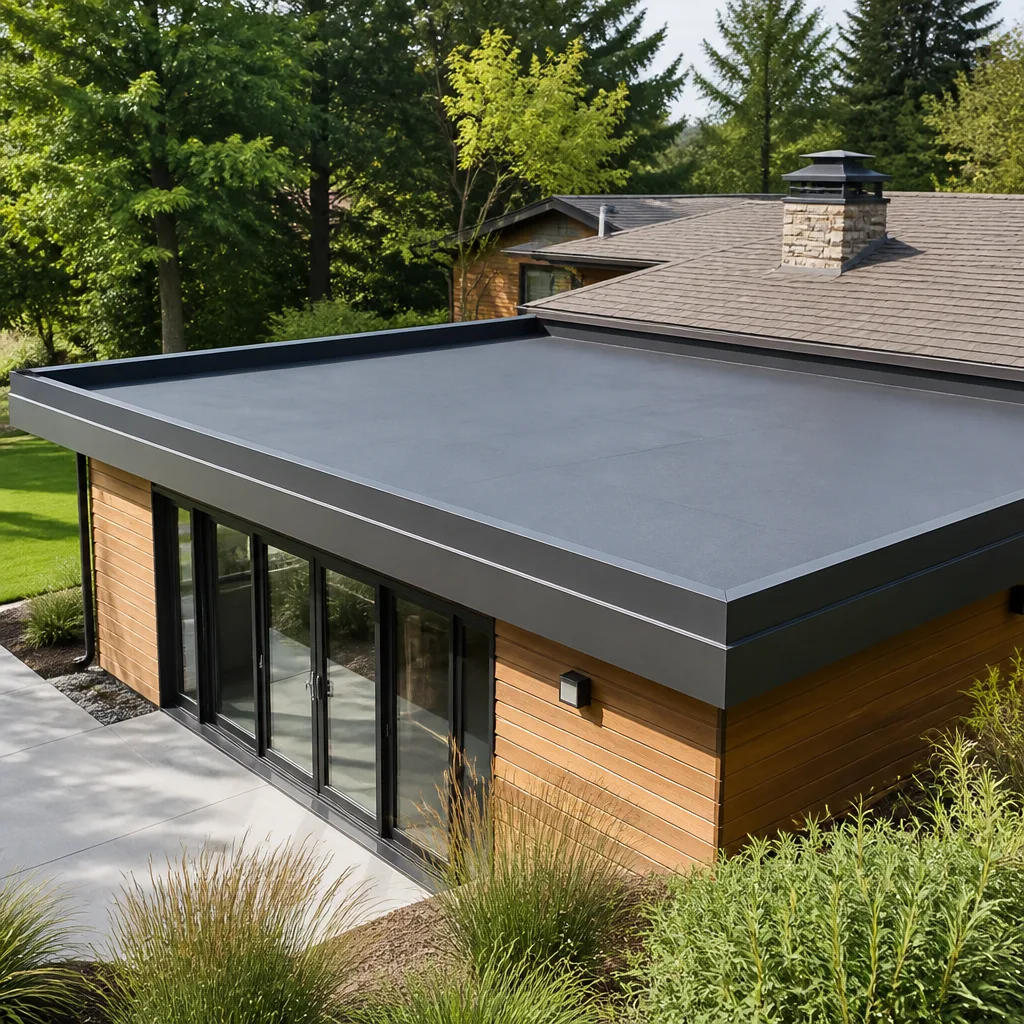 Flat & low-slope
Free roof inspection with deck photos before we talk money - GAF and Owens Corning certified installation
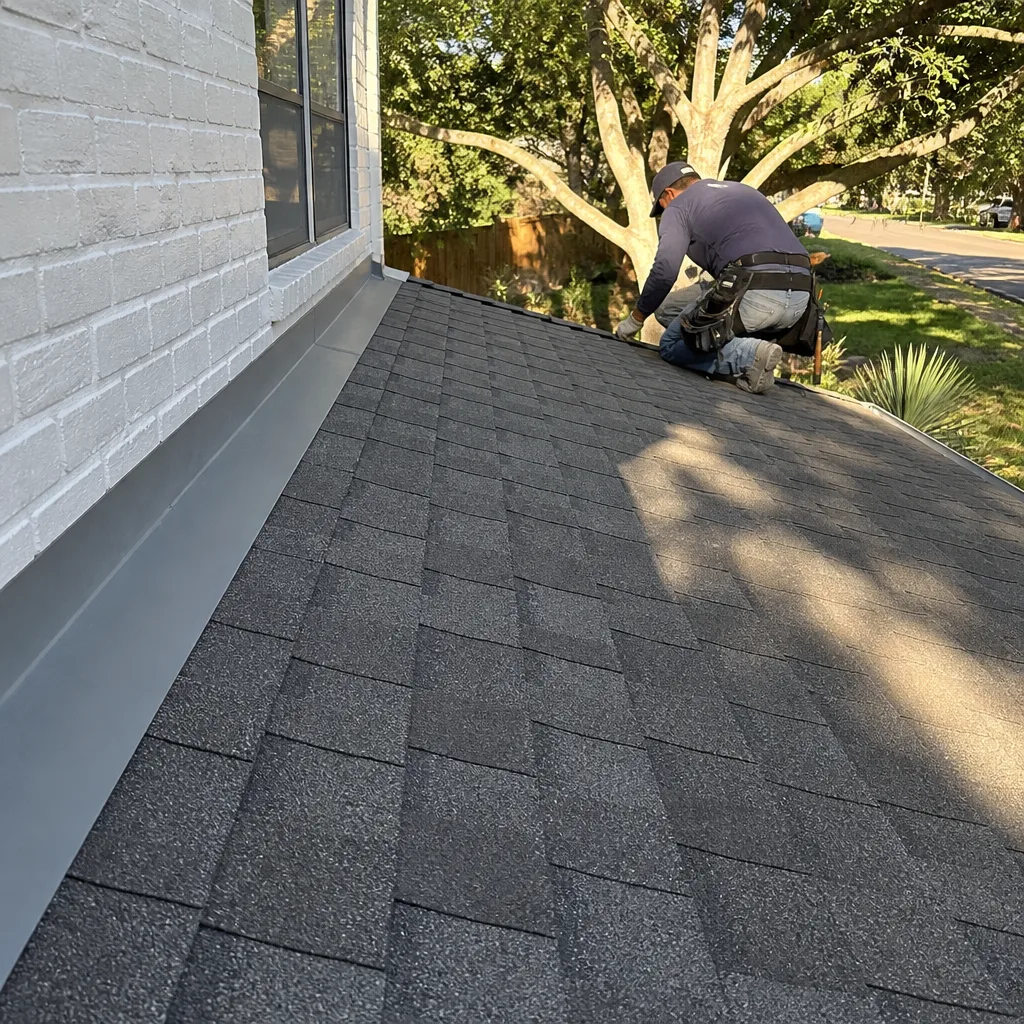
IKO Flashing Replacement: The San Antonio Owner’s Guide
If you’ve got an IKO roof and flashing that’s pulling away from a chimney, wall, or valley, we stock IKO-compatible flashing and install it throughout San Antonio, typically for $375 to $950 depending on location, material, and how much surrounding shingle work is needed. Most flashing replacements take one visit, and we carry galvanized steel, aluminum, and copper flashing on the truck so we’re not making you wait on a parts order. You’ll get a written price before we touch anything, and the work is covered by our 365-Day Done Right Promise.
The way most homeowners in San Antonio find out their IKO flashing has failed is a slow one. A spot on the ceiling near a chimney starts to darken after a heavy spring rain. You go up with a flashlight and see the metal has pulled away from the brick or the caulk has cracked into small chunks. Sometimes it’s a valley flashing that’s been catching leaves and holding moisture against the shingle edge. By the time you see the inside stain, water has usually been working its way in for months. That’s why we recommend getting flashing checked whenever you’re already having any IKO shingle repair done.
Key Takeaways
– IKO flashing replacement in San Antonio typically runs $375 to $950 installed
– We stock galvanized steel, aluminum, and copper flashing on the truck
– Flashing fails most often at chimneys, sidewalls, and valleys in Texas heat
– You get a written price in dollars before any work starts
– 365-Day Done Right Promise covers every flashing replacement we perform
Styles & brands we work with
Which IKO Models This Applies To
IKO flashing itself isn’t tied to one shingle line, but it’s spec’d and installed to work with IKO’s roof systems, including the Cambridge, Dynasty, Nordic, and Royal Estate lines we see across San Antonio. The flashing profile that works under a Cambridge architectural shingle is different from what’s needed under IKO’s heavier Nordic performance shingles simply because of shingle thickness. If someone installs flashing sized for a thinner shingle over a thicker one, the step flashing doesn’t seat correctly and you get gaps at the shingle edge where wind-driven rain gets in.
Here’s the practical part. When we arrive, we check the existing flashing gauge and width first. Most residential step flashing is 4-inch by 4-inch or 5-inch by 7-inch, in 26-gauge or 28-gauge metal. IKO’s installation specs call for corrosion-resistant metal with a minimum 2-inch headlap, and in San Antonio’s climate, we recommend 26-gauge aluminum or galvanized steel as the floor for durability. Copper is an upgrade, and we’ve installed it on several Alamo Heights homes where the homeowner wanted the flashing to outlast the second shingle replacement.
On OEM versus aftermarket for IKO specifically: IKO doesn’t manufacture its own flashing as a branded product line. What roofers call “IKO flashing” is simply flashing installed to IKO’s published installation specifications for their shingle systems. So the choice isn’t really IKO-brand versus generic. The choice is between thin, box-store flashing that’s 28-gauge or lighter, and contractor-grade 26-gauge metal that won’t deflect under a San Antonio hailstorm or buckle after ten summers of 100-degree heat. We carry the latter.
Signs Your IKO Flashing Replacement Is Failing
1. Water staining on ceilings or walls near chimneys or roof-wall joints – This is almost always flashing failure, not shingle failure. The stain appears after rain because water is entering where the roof plane meets a vertical surface.
2. Visible gaps between flashing and brick, siding, or stucco – If you can see daylight or a gap between the metal edge and the wall surface, the seal has failed. Brick chimneys are especially prone because mortar expands and contracts at a different rate than metal flashing during San Antonio’s hot days and cooler nights.
3. Cracked, crumbling, or missing caulk along the flashing edge – The sun in San Antonio breaks down exterior caulk in three to five years. Once the sealant cracks, capillary action pulls water behind the flashing even without a windy storm.
4. Rust streaks or pinholes on the metal itself – Galvanized flashing eventually sacrifices its zinc coating. When you see rust streaks running down from the flashing line onto shingles, the metal is thinning and will fail. This is particularly common on older roofs in the Stone Oak corridor where we see a lot of 20-plus-year-old flashing.
5. Granules accumulating in gutters directly below a valley – This means water is funneling through the valley faster than designed, which wears the shingle surface next to the flashing. The valley metal may still look fine from the ground, but the flow rate is wrong, which points to a flashing or underlayment issue.
See the difference
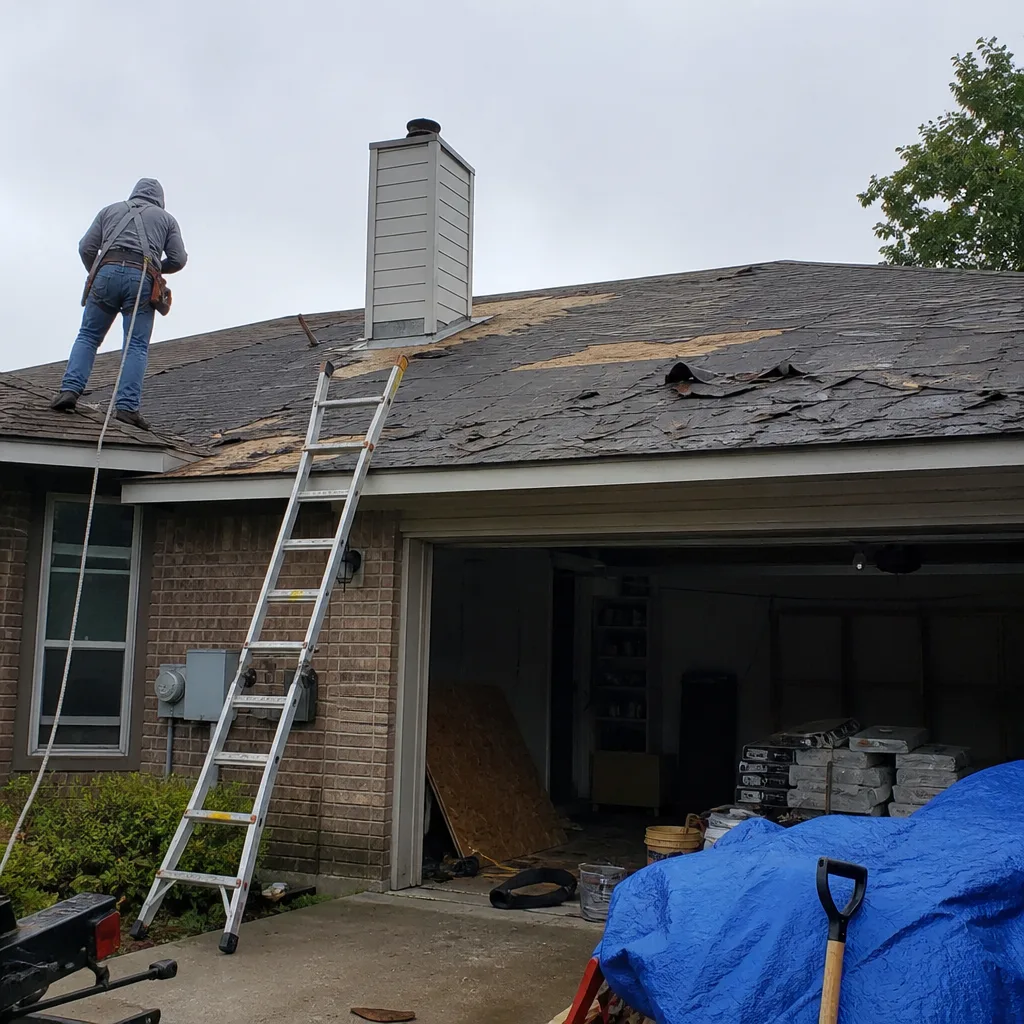 Before
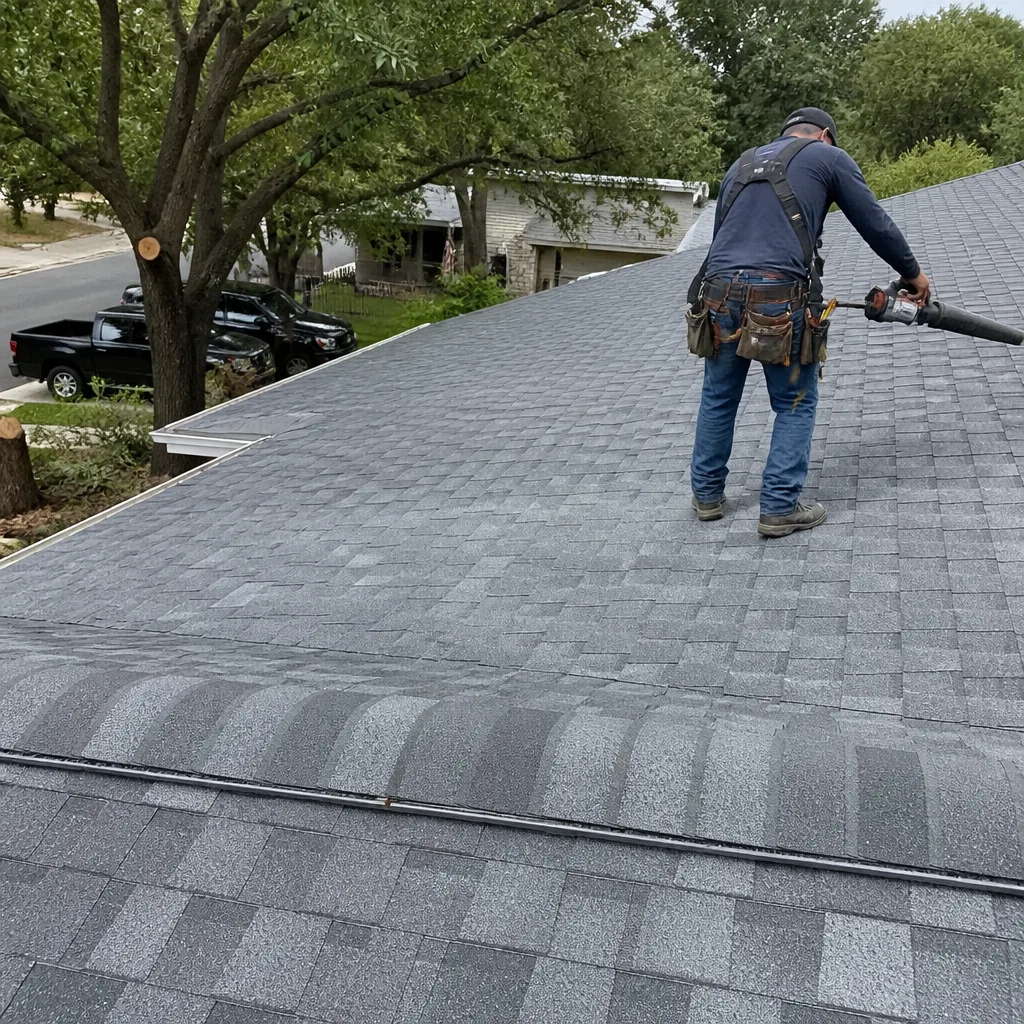 After
After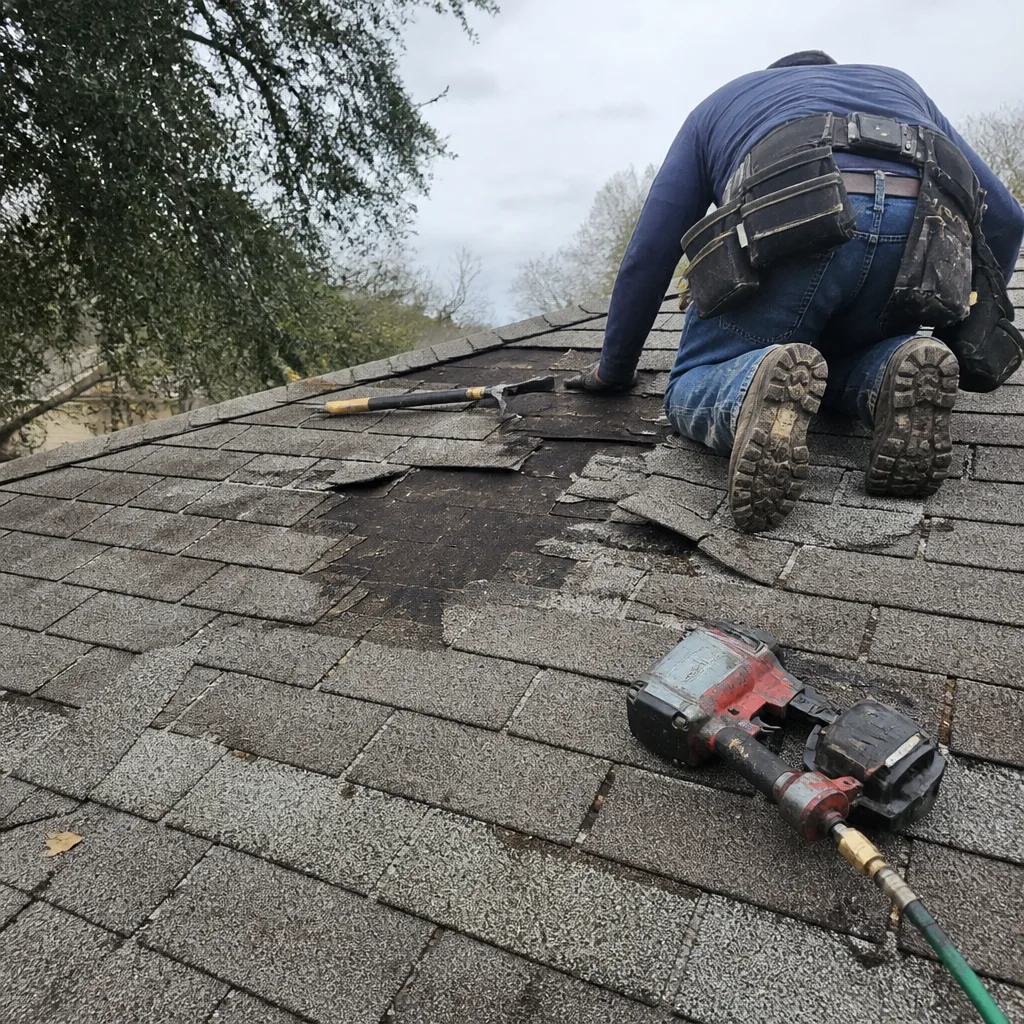 Before
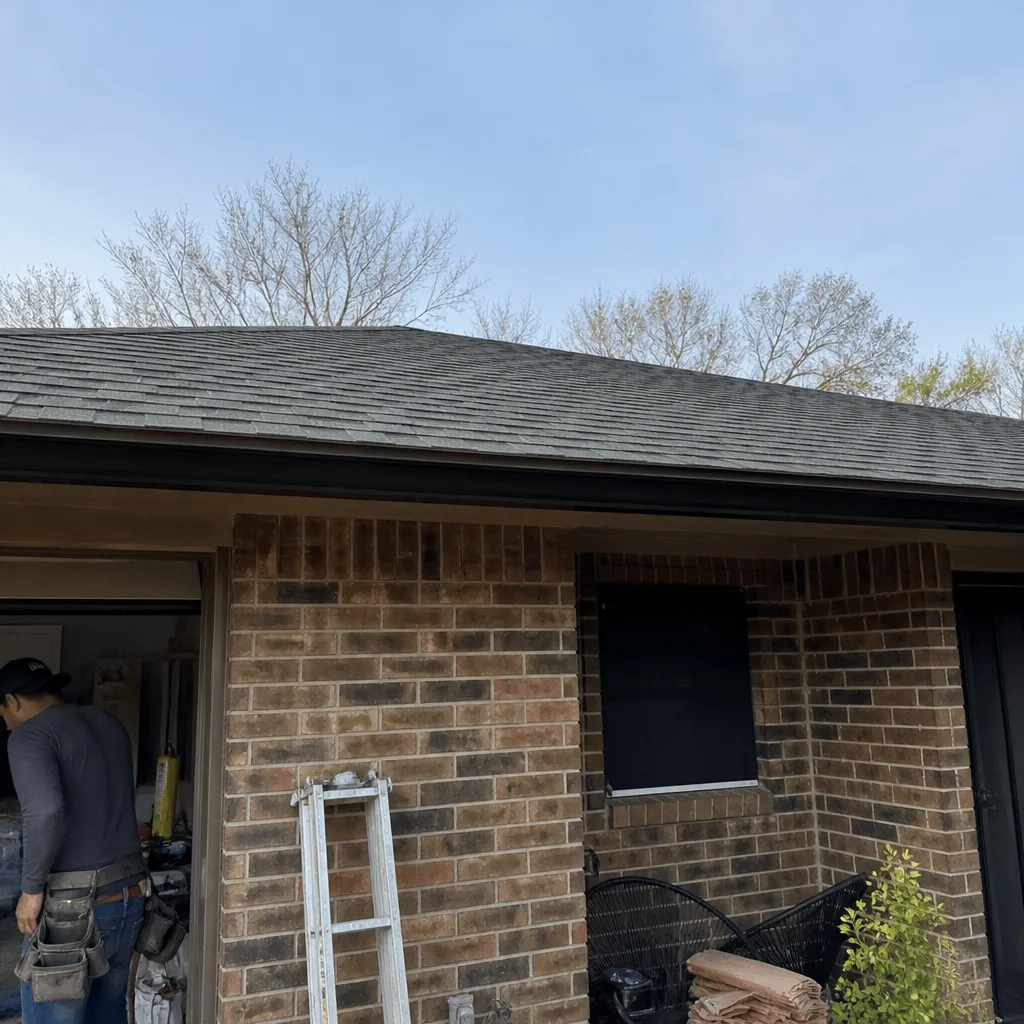 After
After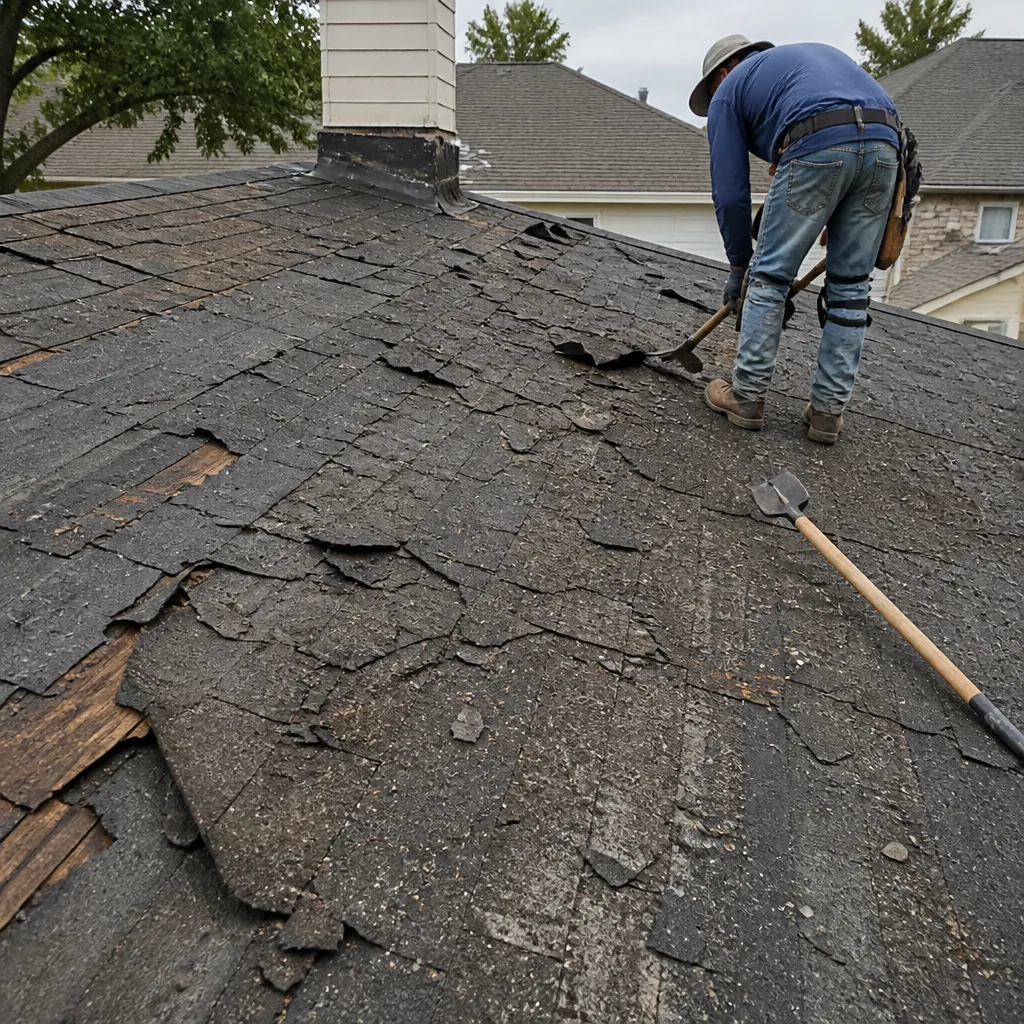 Before
 After
AfterReplacement Cost & What’s Included
For most IKO flashing replacements in San Antonio, you’re looking at $375 to $950 installed. A simple step flashing section along a wall might run $375 to $550. Chimney flashing that needs new counterflashing, step flashing, and a cricket repair typically lands between $650 and $950. A full valley replacement with new underlayment under the flashing usually falls in the $500 to $800 range.
The price includes the flashing material cut to your roof’s measurements, sealant that’s rated for Texas sun exposure, any shingles we lift and re-set, and full clean-up. What drives the range is mainly access: a single-story roof with a straightforward walk-up is faster to work than a two-story chimney on a steep pitch. Copper flashing adds a material premium of roughly $150 to $300 depending on the run length, but it commonly lasts 50 years or longer in our climate.
You’ll see the exact number in writing before we start, not after. That’s how Erik Lindgren runs every Birchbark job in San Antonio. No change orders unless we open the roof and find something structural that no one could have seen from the surface, and if that happens, we’ll show you what we found and get your approval on the new price before continuing.
DIY or Call Us?
Flashing replacement is one of the roof repairs we most often see go sideways as a DIY attempt. The reason isn’t that flashing is conceptually hard. It’s that doing it correctly requires lifting shingles without cracking them, lapping pieces in the right direction so water always flows down and out, and knowing where the existing underlayment has degraded. If you remove old flashing and find rotted decking underneath, you now have a structural repair, not a flashing swap, and it needs to be done before the metal goes back on.
What’s safe to check yourself: you can look for visible gaps, cracked caulk, and rust from the ground with good binoculars, or from a ladder if you’re comfortable. But we’d advise against walking a roof around flashing areas without fall protection, and we’d absolutely advise against removing any flashing that’s integrated into a chimney or roof-wall joint.
If you find a problem and want it fixed properly, call us at (903) 354-7802. We’ll come out, tell you exactly what’s failed and what it’ll cost, and put the price in writing before any work starts.
FAQs
How long does IKO flashing last in San Antonio?
In San Antonio’s climate, galvanized or aluminum flashing typically lasts 15 to 25 years depending on sun exposure, roof pitch, and the quality of the original installation. Copper flashing commonly lasts 50 years or longer. The sealant joints fail before the metal does, so re-sealing every five to eight years can extend the life of the flashing significantly.
Can flashing be repaired instead of replaced?
Small sealant cracks can sometimes be cleaned and re-caulked for under $200, which buys you a season or two, but once the metal is rusted through, bent, or separated from the wall, replacement is the fix that lasts. We’ll give you an honest recommendation either way. Call (903) 354-7802 and we’ll tell you what you’re actually working with.
How long does an IKO flashing replacement take?
Most flashing replacements take between two and five hours on site. A straightforward step flashing section can be done in a morning. Chimney flashing with a new cricket takes longer, plus any shingle work around it. We’ll give you a time window before we start, and we show up when we said we would.
Do you stock IKO-compatible flashing, or do you have to order it?
We stock 26-gauge galvanized steel, aluminum, and copper flashing on the truck in the standard 4×4, 5×7, and 10-foot roll profiles. That covers nearly every IKO roof we work on in San Antonio. We also work with GAF, Owens Corning, and CertainTeed systems, so if your flashing needs to match a specific setup, we’ll let you know before we order anything.
Written by Erik Lindgren, Owner, Birchbark Roofing San Antonio at Birchbark Roofing San Antonio, serving San Antonio and nearby areas.